Menstruation 101 🩸 A Friendly Period Guide for Girls & Caregivers
Why this guide matters 💡
First periods can bring big questions—and big feelings. This guide explains what a period is, what’s normal, and how to feel prepared at home, school, and activities. In South Florida, Let’s Talk About It! offers free, judgment-free workshops that fill education gaps not always covered at school or at home—helping reduce teen pregnancy & STIs and build self-awareness, self-confidence, and self-determination. 🌷
What is a period? (Plain English) 📘
Each month, the body prepares for the possibility of pregnancy by building a lining inside the uterus. If pregnancy doesn’t happen, that lining sheds and exits through the vagina—that’s a period. It’s a healthy, normal body process.
Typical first period (menarche): often between 9–13 years old (earlier or later can still be normal).
Usual length: 2–7 days.
Cycle length: early cycles may be irregular while the body finds its rhythm.
What to expect (and what’s normal) 🧭
Flow changes: lighter on some days, heavier on others.
Color changes: from bright red to darker brown (both can be normal).
Mild cramps or backache: common for some; see comfort tips below.
Energy & mood shifts: rest, hydration, and support help.
Call a clinician if you see:
Soaking a pad (or equivalent) in about an hour for several hours,
Severe pain not eased by rest/heat,
Dizziness/fainting, or
Periods stopping for months after starting (without a known reason).
Period products 101 🛍️
Pads: stick to underwear; great for first periods. Change about every 3–4 hours or when damp/soiled.
Tampons: inserted in the vagina; change every 4–8 hours (don’t exceed 8 hours).
Menstrual cups: flexible, reusable cups; up to 8–12 hours (follow brand instructions).
Period underwear: absorbent, washable; use alone on lighter days or as backup.
Disposal & hygiene:
Wrap used pads/tampons and place in a trash bin (don’t flush). Wash hands before and after changing. Follow brand care for cups/period underwear.
Comfort care that helps 🌿
Warmth: heating pad or warm bath for cramps
Hydration & snacks: steady energy helps mood and comfort
Gentle movement: walking or stretching eases cramps for many
Sleep: a little extra rest is normal and helpful
Caregivers: Encourage trying one small thing at a time and noting what works best.
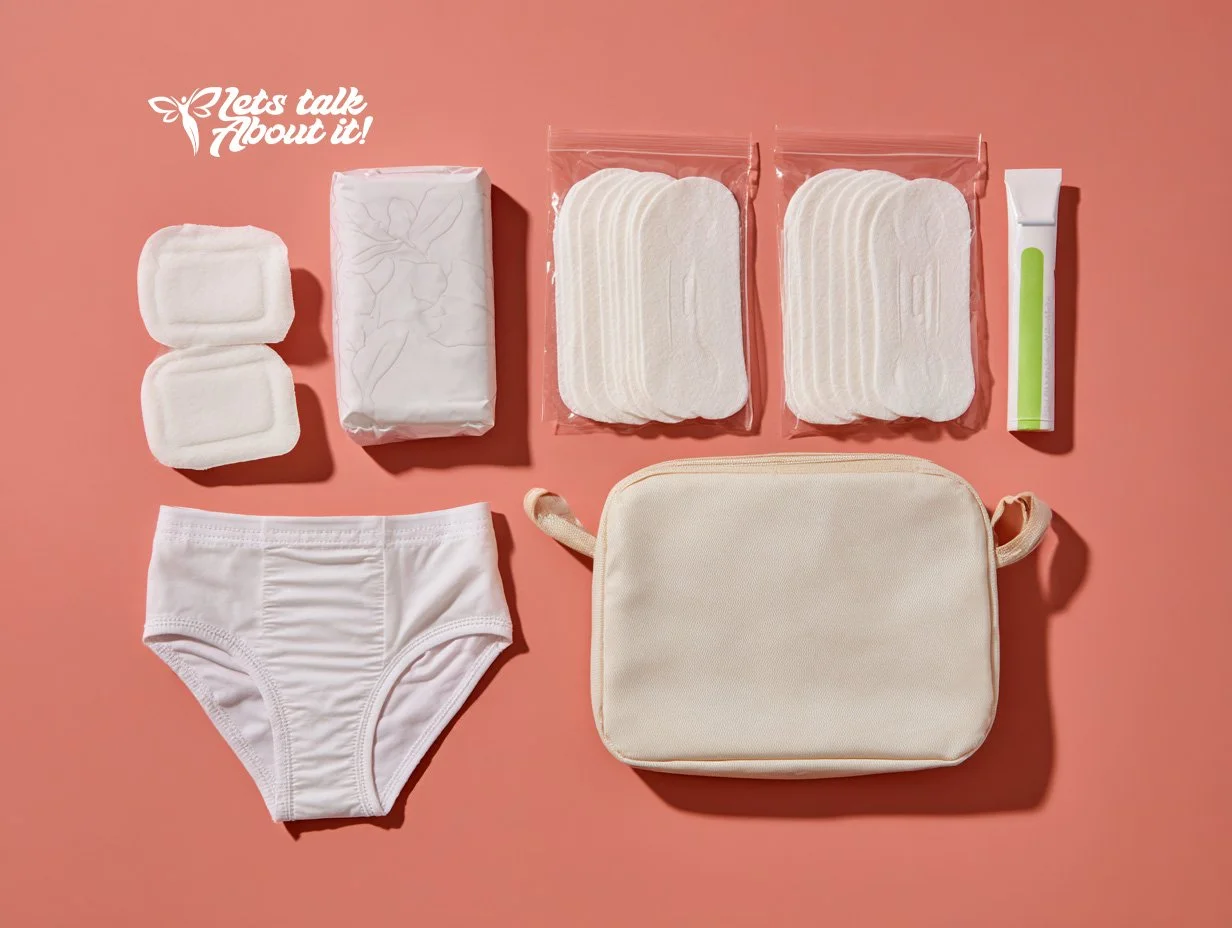
Build a simple period kit 🎒
2–3 pads (different absorbencies)
Wipes or tissues
Resealable bag (for soiled underwear)
Spare underwear (in a small pouch)
Encouragement note (“You’ve got this—text me anytime!” 💌)
Optional: heat patch, tracker app, or small calendar
Keep one kit in the backpack/locker and another at home to make repacking easy.
School-day tips 🏫
Know the map: nearest restroom and nurse’s office
Signal plan: agree on a simple text/emoji for help (⭐️)
Clothing: dark bottoms can reduce stress on heavier days
Ask for support: a trusted teacher/counselor can help with restroom passes and supplies
Talk it out: mini scripts 🗣️
“I’m learning what works for my body.”
“I need a quick restroom break.”
“Could we grab more pads for my locker?”
Caregivers: Short, regular chats > one “big talk.” Use correct terms (vulva, vagina, uterus, pad, tampon, cup). If you’re unsure, learn together.
Quick FAQs ❓
How do I know a first period is coming?
Common early signs include breast development, growth spurts, and clear/white discharge months before the first period.Are cramps normal?
Mild cramps can be. Try warmth, hydration, light movement, and rest. Call a clinician for severe or persistent pain.What should I put in a period kit?
Pads, wipes, resealable bag, spare underwear, and a short note of encouragement.How often should products be changed?
Pads: ~3–4 hours; tampons: 4–8 hours; cups: up to 8–12 hours (follow product directions).What if a period starts at school?
Use the kit, ask a trusted adult, request a discreet pass. Accidents happen; they’re manageable—not a crisis.
Our mission in action (South Florida) 🌴
We host free, judgment-free workshops:
Puberty Zone (Ages 9–13): body basics, periods, hygiene, feelings & friendships, boundaries, asking for help
Young Women (Ages 14–21): body awareness, pregnancy prevention, STI prevention, consent, healthy relationships, clinic confidence
Eligibility: Girls/female participants only. Caregiver required for the first session, optional for the second.